
This essay draws on the historical scholarship of Phathisa Nyathi, whose work on Makokoba and Bulawayo’s naming traditions forms the documentary foundation of this reflection.
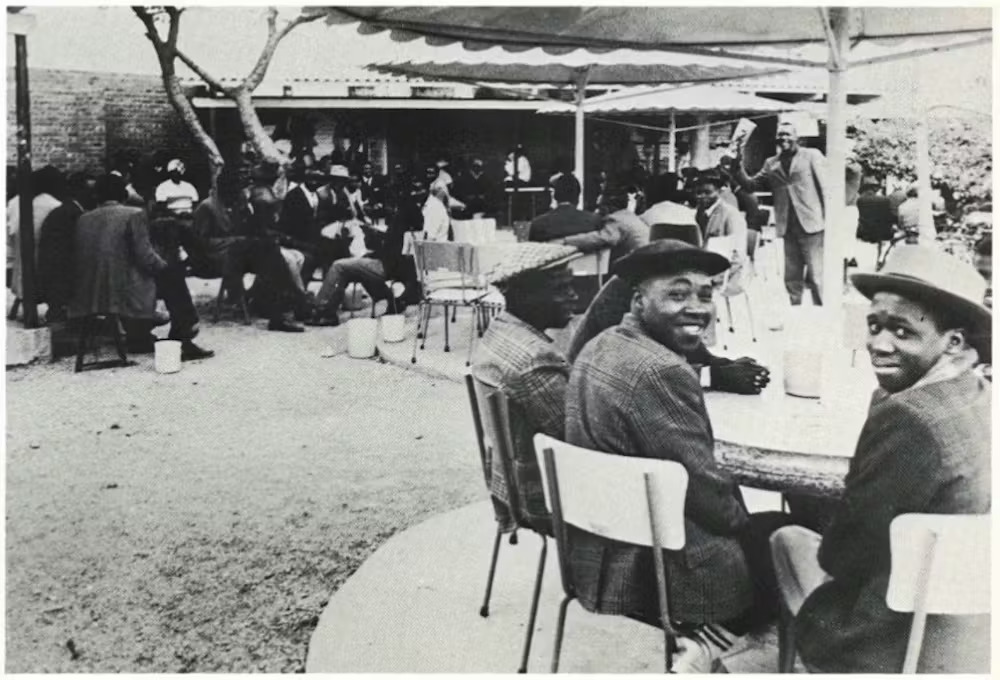
Let me tell you something about the place where I come from. Not the Bulawayo of the avenues and jacarandas, not the Bulawayo of the City Hall clock or the National Gallery — but the Bulawayo underneath all of that. The Bulawayo that was built, ngepiki lefotsholo, brick by brick on the backs of people who were allowed to labour here but not to live freely. That Bulawayo has a name. It is Makokoba.
And from Makokoba, as if by the logic of history itself, came Highlanders FC.
These two things — a township and a football club — are not merely linked by geography or by the coincidence of time. They are, in the deepest sense, the same organism. To understand one, you must walk through the other.
As the historian Phathisa Nyathi has meticulously shown us, the very name Makokoba speaks of the body in motion — specifically, the stooped walk of old age. Ukhule uze ukhokhobe — may you grow old enough to stoop. It is a blessing. A story of survival. In a township built for temporary black labour, where women were turned away at the door, where a white superintendent named Fallon tip-toed through narrow corridors peering into houses to catch any evidence of ordinary family life — in that place, the mere wish to grow old was itself an act of defiance.
Makokoba was established in the shadow of what had been King Lobengula’s KoBulawayo — the seat of the Ndebele State. The colonisers did not just occupy land, they occupied meaning, they took the royal kraal and, in its place, erected a Location, a holding pen, a dormitory for the labour force that would build their city.
And yet. Within the squalor — the tiny windows that did not open, the overcrowding, the rampant disease, the Bulawayo Municipal Compound (BMC) with its Lozi and Tonga and Chewa workers packed in from the north-west — within all of that, something was incubating. Nyathi is unambiguous on this: Makokoba was the cradle. Everything that would define Bulawayo’s cultural life — nationalist politics, trade unionism, music, Christian worship, education — it all began here. And so did football.
Highlanders Football Club was founded in 1926 — barely three decades after the British South Africa Company had dismantled the Ndebele State and turned KoBulawayo into a colonial city. The wound was still fresh. The founding was an act of cultural reconstruction. Albert and Rhodes Khumalo did not found Highlanders FC for themselves. They founded it for the men and boys around them, young men from Makokoba, men who had grown up eLokitshini, men who worked for the railways and the council and the white households, men who were told the city was not theirs.
They chose football. Not because it was easy, but because it was the one arena where the rules — at least nominally — were the same for everyone. On a pitch of red earth, in boots borrowed or bought second-hand, a young man from Makokoba could be extraordinary. He could be watched. He could be seen — fully and without apology.
Bosso and the Ndebele Identity Question
Here is where we must be careful, because the history is more layered than a simple Ndebele-pride narrative. Makokoba, as Nyathi reminds us, was always a mixed township. The BMC section housed primarily Lozi, Tonga, and Chewa workers — who had migrated south for work. The Nguni women on the western stands — omasitanda — were not all Ndebele-speaking. The township was, from its earliest days, multilingual and multiethnic.
And Highlanders FC reflected this. The club’s early rosters included players from across Matabeleland and beyond. What bound them was not a single ethnicity but a shared condition: they were black workers in a colonial city, they were from this township, they had sweated on this same red earth. Highlanders became the vessel into which Makokoba poured its collective self.
Over time, the club became deeply coded as Ndebele — and this is not erasure of the other histories, but rather an honest account of how cultural gravity works. As Bulawayo became the spiritual capital of Matabeleland, and Makokoba its oldest and most storied township, the Ndebele cultural register became dominant. The club’s nickname, Bosso — a term of street authority and respect, rooted in the vernacular of these very streets — said everything. Bosso did not ask permission. Bosso arrived.
My late grandfather used to say that Barbourfields Stadium — Emagumeni, as it is known — was never just a stadium. It was a parliament. On match days, the issues of Bulawayo were settled on those terraces. Political grievances that could not be voiced in formal spaces found their expression in the chants. The passion for Highlanders was never separate from the passion for dignity.
This oral tradition is consistent across families. Older residents of Makokoba’s Vundu section — those tiny-windowed BMC houses that Nyathi describes — will tell you that the sound of a Highlanders goal scored could be heard from inside those poorly ventilated rooms even before the radio confirmed it. The neighbourhood had its own nervous system. A roar in one yard meant a cascade through the next.
In the 1970s, during the liberation war years, Highlanders matches were one of the few occasions when Bulawayo’s black population could gather in large numbers without explicit political framing. The football pitch was a sanctioned space of congregation. And so the crowds were enormous — not just because of love of football, but because people were hungry for the experience of being together, of being a people.
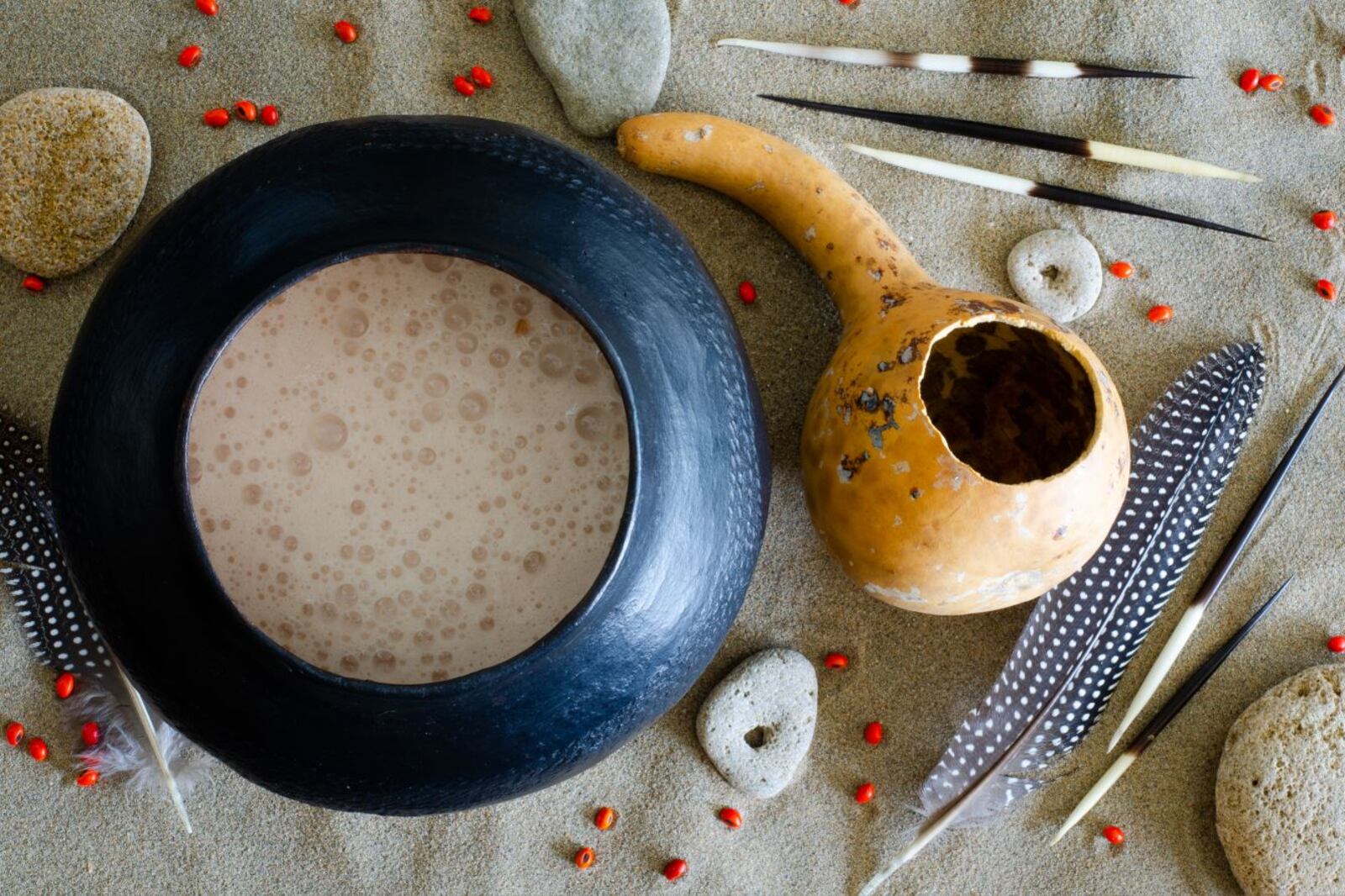
The Nguni women of Makokoba – omasitanda who bought stands and built houses and brewed beer before the City Council muscled into the industry — these women were the financial backbone of the township’s cultural life. They funded community events. They fed players. In the oral record, it is consistently the women of Makokoba who appear as the quiet sustainers of the football culture that the men played out publicly.
The 1912 municipal brewery that was established near what is now MaKhumalo Beer Garden displaced those women entrepreneurs. But the beer garden itself — its name, its location, its continued role as a social anchor — is a testament to the layered economic and cultural history of Makokoba. The women lost the industry. But they kept the culture. And the culture kept Highlanders.
Makokoba also produced the political DNA of Matabeleland. The nationalist movements of the 1950s and 1960s were organised in the same rooms, the same yards, the same beer halls where Highlanders victories were celebrated. Benjamin Burombo, the labour activist who shook colonial Bulawayo in the late 1940s, moved through these same streets. The City Youth League had its roots here. When you understand this, the ferocity of Highlanders support begins to make more sense — it was never only football.
The Language of Barbourfields
There is a call-and-response tradition at Bosso matches that deserves its own study. When the crowd at Barbourfields begins the deep, coordinated chant — Bosso! Clap clap clap Bosso! — the sound is not simply noise. It is ancestral because it comes from the same place as the war cries that rang across Matabeleland before colonisation. The same diaphragm, the same intention: to announce presence, to declare that we are here and we are not going anywhere.
Listen closely to what the faithful sing and you begin to understand that the crowd fully knows it is doing historiography. Every matchday at Barbourfields is an act of collective memory, the faithful singing the township back into existence, one call and one thunderous response at a time. The political songs came later, woven in during the 1970s and 1980s when the terraces became one of the few places where collective feeling could be expressed without a knock on the door at midnight — songs that named the suffering of Matabeleland without naming it directly.
Nyathi’s linguistic work on names and naming — the way a single word like Makokoba carries a philosophy of life, a worldview, a relationship between the body and time — applies equally to the vocabulary of Highlanders. The name Bosso is not innocent. It is a statement of hierarchy, of earned authority, of the township street recognising its own sovereign. To call a football club Bosso is to declare that it governs something — not a territory but a feeling.
A Century On
In 2026, Highlanders FC turns 100. This is a century lived through colonisation, the Rhodesian state, the liberation war, independence, the catastrophe of the 1980s Gukurahundi massacres, economic collapse, and the persistent resilience of a people who have never stopped showing up to Barbourfields.
Makokoba, meanwhile, is still there. Still the oldest African township in Bulawayo. Still spelt wrong in too many places — the ‘h’ still missing from far too many official signs, as if the city has never quite gotten around to properly reading itself. Nyathi’s frustration with this — his point that the missing ‘h’ is a symptom of a deeper failure of cultural care — is a frustration shared by every Bulawayo native who grew up knowing that the names on the streets were the last words of a world that colonialism tried to silence.
But here is what the centenary of Highlanders FC says to all of that: we did not submit to silence. We built a football club in a Location where women were not supposed to be allowed. We named it with the authority of the street. We filled a stadium that colonial urban planning never anticipated would need to be so large. We gave our children the famous black and white jerseys before we gave them shoes, because the jersey was the first coat of arms our township ever had.
What Our Ancestors Knew
There is a generation of Makokoba grandmothers — most of them gone now — who never watched a football match in their lives but whose homes were the headquarters of Highlanders FC’s social world. They fed the players. They housed the supporters who came from Gwanda and Plumtree and Lupane. They prayed over the injured. They mourned the losses and celebrated the titles with the full ceremonial register of Ndebele womanhood: the ululation, the dance, the beer.
These women are the missing chapter in Highlanders’ official history. Just as the Nguni women of Makokoba’s western stands — those early property owners, those brewers — are the missing chapter in the township’s official history. Phathisa Nyathi’s legacy is, at its heart, about recovering what was unnamed and undervalued. The same project must be applied to the full story of Bosso.
Because Highlanders FC was never just a football club. It was Makokoba’s answer to colonialism. It was the city’s proof that black men could build institutions that lasted. It was the weekly ceremony that kept the community stitched together when everything else — the laws, the pass books, the curfews, the racial housing allocations — was designed to unravel it.
One hundred years.
One hundred years of Bosso — and Makokoba is still there, still pronounced wrong on half the road signs, still the oldest, still the cradle. Bosso’s founding fathers knew what they were doing when they built a football club in a township that was built to break them. They were not just playing football. They were surviving. They were insisting. They were building something that would outlast every official who ever tip-toed through those narrow corridors looking for evidence of life.
The evidence of life. Its name is Highlanders.