
A Nostalgic Remembrance of Highlanders FC’s Fallen Rivals.
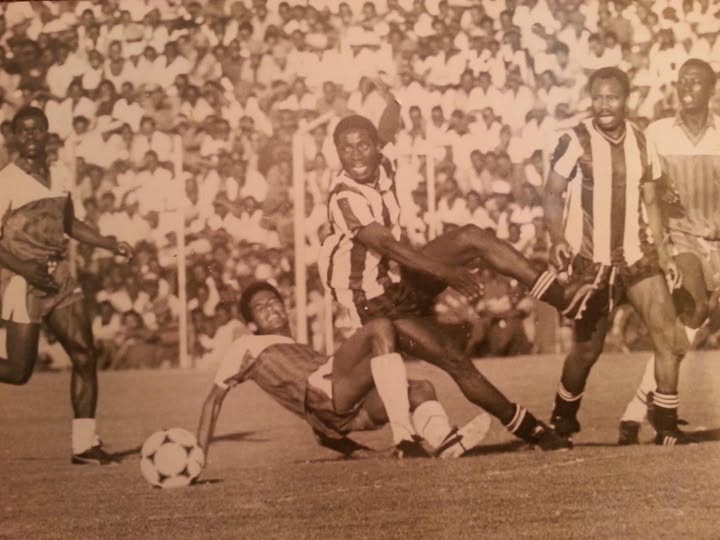
In the shadow of Barbourfields Stadium, where the black and white still waves defiantly every weekend, there exists a graveyard of dreams, one that echoes with the phantom roars of crowds that once filled the terraces of Bulawayo, cheering for teams whose very names now summon ghosts of derby days and local pride that burned as fierce as any championship ambition.
Highlanders Football Club stands today as the last monument to an era when the City of Kings was truly a kingdom of football. Bosso has survived one hundred years of turbulence to remain standing. But kingdoms are defined as much by their conquered as by their conquests. The story of Highlanders cannot be told without speaking the names of those who fell: Zimbabwe Saints, Amazulu, Railstars, and the modern challengers Njube Sundowns, Bantu Rovers, Bulawayo Chiefs and Bulawayo City, teams that dared to share the same streets, the same soil, the same unforgiving dream.
In 1941, Bulawayo had a local league of 16 football teams. Matabeleland Highlanders, Mashonaland Club, Northern Rhodesia Club, United Africans Club, Homesweepers Club of Western Commonage, all playing a nine-month season. This was a city alive with football, a place where every township, every community, could field a team and stake a claim. Time, economics, and the cruel mathematics of survival have whittled that number down to essentially one, with brave new challengers trying to revive the glory days of the Bulawayo derby.
THE SAINTS WHO LOST THEIR HALOS
Zimbabwe Saints. Even the name carries a certain weight, a suggestion of righteousness and divine purpose. But the Saints weren’t always saints. They were born as Mashonaland United FC in 1931, a merger of several teams from Shona-speaking areas but based in Bulawayo. For 44 years they wore that tribal tag like a badge of honour, a team for the Shona migrants who found themselves living and working in the heart of Ndebele territory.
The name changed everything in 1975. There had been running battles, several people left seriously injured as tribal tensions erupted in Bulawayo. The late Dr Joshua Nkomo could no longer stand by and watch football tear his city apart. He invited former Bulawayo Town Clerk Mike Ndubiwa and Highlanders Board Secretary Jimmy S Ncube, instructed them to drop ‘Matabeleland’ from Highlanders. Then he met with Mashonaland United leaders, advised them to come up with a name that bore some resemblance of national character. And so, Mashonaland United became Zimbabwe Saints, and Matabeleland Highlanders became simply Highlanders.
The derby days between Highlanders and Saints weren’t merely football matches. They were civil wars conducted with a leather ball. According to Madinda Ndlovu, Highlanders legend, ‘the biggest football fixture in Bulawayo up to Independence was the Bulawayo derby pitting Highlanders FC and Zimbabwe Saints.’ Families divided, workplaces split down the middle, friendships tested by ninety minutes of passion that spilt into the beer halls and township streets long after the final whistle.
In 1977, Zimbabwe Saints won their first league championship. Then came 1988, the year that still makes old Saints supporters’ eyes light up when you mention it in the beer halls. Chauya Chikwata went on a 23-game unbeaten run that culminated in their second and final league title. Roy Barretto coached, Ephraim Chawanda captained. They played what was known as ‘carpet football,’ perfecting the pass-and-move approach that made them the most aesthetically pleasing team in Zimbabwe.
The following year they represented Zimbabwe in the African Cup of Club Champions, reaching the quarter-final stage. That 1988 Saints team produced legends: Joseph Machingura, Agent Sawu, Muzondiwa Mugadza, Ronald Sibanda, Henry McKop, Gibson Homela, John Sibanda, Ebson ‘Sugar’ Muguyo. Even Vice President Joseph Msika had come through the Saints ranks in the early days. Zimbabwe Saints also achieved the Double, joining that exclusive club that only Dynamos, Black Rhinos, Highlanders and CAPS United have entered.
But professional football demands more than passion and local pride. Infrastructure, investment, administration, the kind of financial backing that can weather inevitable storms. The Saints could not conjure miracles from empty coffers. The descent was gradual, then sudden. Relegated from the Premier Soccer League in 2006. An attempted merger with Njube Sundowns in January 2009 that failed. A desperate purchase of the Eagles franchise from Chitungwiza in February 2011 to buy their way back into the Premiership. The return was brief, underwhelming. Bulawayo already had Highlanders and Chicken Inn, and there wasn’t room for three at the table.
By 2011, Zimbabwe Saints were relegated again. Then came the final indignity: on 3 May 2016, Zimbabwe Saints were expelled from the Zifa Bulawayo Province Division Two League for failing to affiliate and fulfil three consecutive matches. Not for a glorious last stand, not for fighting and failing, but for simply not showing up. The clubhouse still stands in Queens Park East. One of the few teams in Zimbabwe who owned their own sporting facilities. But a building is just bricks and mortar without the souls that animated it.
AMAZULU: THE WARRIORS WHO COULDN’T SUSTAIN THE BATTLE
If Zimbabwe Saints represented spiritual competition rooted in history, Amazulu represented something more audacious: a brash newcomer who dared to interrupt a two-way conversation and ended up stealing the show, if only for a moment.
Amazulu FC was founded in 1996 by Charles Mhlauri, arriving in Bulawayo’s football landscape nearly 65 years after Zimbabwe Saints and 70 years after Highlanders. Their very name spoke to identity and heritage, to a connection that transcended mere sport. Gold and black colours, Usuthu the nickname, the same Zulu war cry used by their South African namesake.
And then came 2003. Highlanders had won four consecutive league titles from 1998/99 to 2002, establishing one of the great dynasties in Zimbabwean football. Bosso’s dominance over Bulawayo seemed complete and unassailable. That year, against all odds, Amazulu won the Zimbabwe Premier Soccer League championship. In just their seventh year of existence, they’d broken Highlanders’ stranglehold and brought the league title to Bulawayo by a path other than the well-worn road to Barbourfields.
The celebrations in Usuthu sections of Bulawayo were ecstatic. Here was proof that another way was possible, that Highlanders’ dominance wasn’t inevitable. In 2002, Amazulu had won the Independence Cup, defeating Dynamos 1-0, adding silverware to their growing collection.
But sustainability in Zimbabwean football has always been about more than winning championships. After nine years, in 2005, the club was dissolved. Nine years. From formation to championship to extinction in less than a decade. The club that had broken Highlanders’ four-year stranglehold simply ceased to exist. When Bulawayo supporters talk about the 2003 championship, there’s a wistful quality to the memory. Not just of a title won, but of possibility extinguished, of a path that opened briefly then closed forever.
RAILSTARS: THE WORKING MAN’S DREAM DEFERRED
Of all Highlanders’ fallen rivals, perhaps none represents the changing fortunes of Bulawayo itself quite like Railstars Football Club, the team that emerged from Zimbabwe’s railway industry, carrying the hopes of the working class on its shoulders.
Railstars was an extension of an industry, a community, a way of life. When the railway workers clocked off their shifts, they went to the stadium to watch the railwaymen play. The club was woven into the fabric of working-class Bulawayo, a team for the men who built and maintained the arteries of commerce that kept the city alive.
But Railstars’ fate was tied too closely to the industry that birthed it. As Zimbabwe’s railway system declined and the cruel mathematics of a contracting economy, so too did the football club. The connection that once gave Railstars its strength became the anchor that dragged it down. When Railstars fell, it wasn’t just a football club that died. It was a piece of Bulawayo’s industrial heritage, a symbol of a time when the city hummed with activity and purpose.
HONOURABLE MENTIONS: THE IN-BETWEEN STORIES
Before we speak of those who fell and those who rise, there are others worth remembering. Clubs that occupied that liminal space between the giants and the forgotten, teams that flickered briefly in Bulawayo’s football consciousness before the lights went out.
Njube Sundowns: The Dream That Almost Merged
Njube Sundowns lived in the margins of Bulawayo football. Based in the Njube suburb, playing some matches as far as Gwanda, Sundowns competed through the lower divisions, occasionally breaking through to the Premier League in 2009. Never quite achieving the heights of Saints or the flash of Amazulu, but significant enough to matter to the community it represented.
The club’s greatest claim to historical significance came not from what it achieved, but from what it almost became. On Saturday, 31 January 2009, Zimbabwe Saints’ life members voted in favour of a merger with Njube Sundowns. A desperate attempt by the fading Saints to find new life by joining forces with another Bulawayo club. A marriage of necessity: Saints had the name, the history, the trophy cabinet. Sundowns had, well, they were still functioning. The merger failed. Saints would instead purchase the Eagles franchise from Chitungwiza in February 2011, a move that proved equally futile.
Today, Njube Sundowns has faded from the football landscape, though the Njube Stadium, often called ‘Desert,’ continues to host football. A new Njube United was established in 2018, a phoenix from the ashes of the original Njube United development side from the 1970s. The cycle continues: clubs rise, fall, rise again under new names, carrying forward a community’s dreams even when the original dreamers have long since departed.
Bantu Rovers: The Development Model
Founded in 2008 by former a Highlanders son and Grassroot Soccer co-founder Methembe Ndlovu, Bantu Rovers represents yet another approach to sustaining a Bulawayo club. The nickname Tshintsha Guluva means ‘a progressive way of doing things,’ and progressive they’ve tried to be. American businessman Peter Grieve joined in 2009, bringing international backing to a club that positioned itself not as a traditional rival to Highlanders but as a talent development pipeline.
Bantu Rovers’ history reads like a masterclass in franchise purchasing. They bought the Eastern Lions franchise in 2009 and competed in the Premier League that year and 2010, finishing 9th and 14th respectively. Relegated after the 2010 season, they regrouped. In 2013, Bulawayo Chiefs won promotion and sold their licence to Bantu Rovers. By 2014, Bantu were back in the Premier League after acquiring the Plumtree Chiefs franchise.
But Bantu Rovers’ real innovation came in their development focus. In 2012, the club’s Under-18 squad visited the United States and competed in the prestigious Dallas Cup, finishing in the top four of 28 teams in the Under-19 division. The club facilitates the movement of top student-athletes from Zimbabwe to preparatory schools in the United States and United Kingdom on scholarship opportunities, with the expectation of continuing their education at American colleges and universities.
It’s a business model that acknowledges Zimbabwean football’s economic reality: you can’t sustain a club just by winning matches in Bulawayo. You need alternative revenue streams, international partnerships, a vision beyond the local derby. Whether this model can sustain a competitive Premier League club remains an open question.
Chicken Inn: The Corporate Model That Works
And then there’s Chicken Inn, the club that represents a completely different model from everything that came before, the team that proves Bulawayo can sustain more than just Highlanders if the backing is right.
Founded in 1997 as Bakers Inn, a social team for Innscor Africa workers, Chicken Inn entered competitive football in 2004 at the Division Three level. The corporate backing from Innscor and its Chicken Inn fast-food brand, which led to the name change in 2005, provided something Zimbabwe Saints, Amazulu, and Railstars never had: sustainable, long-term financial support from a major corporation with deep pockets and a vested interest in brand visibility.
The rise was methodical, even ruthless in its efficiency. Promotion to Division One in 2008. Promotion to the Premier Soccer League in 2011 after an unbeaten 28-game run in 2010. Third-place finishes in 2012 and 2018. And then, in 2015, the ultimate validation: Chicken Inn won the Zimbabwe Premier Soccer League championship, becoming only the second Bulawayo club after Highlanders to win the league title in the post-2000 era.
The 2015 title was won with style. A 3-1 home victory over Harare City at Luveve Stadium on 21 November, ending Dynamos’ four-year dominance. The team, coached by Joey Antipas, lost just five of 30 matches that season. Thousands of fans stormed Luveve Stadium in celebration. The Gamecocks had proven that with proper backing, a Bulawayo club could compete with anyone.
But here’s what makes Chicken Inn different from Chiefs and City in the derby conversation: they’re not really positioned as Highlanders’ rival in the way Saints or Amazulu were. Chicken Inn exists parallel to Highlanders rather than in opposition. They’re the other Bulawayo club, yes, but they draw from different wells of support. Their identity is corporate, modern, built on brand rather than community or geographic loyalty. Ironically, in 2006-2007, Bakers Inn sponsored Highlanders, helping Bosso win the 2006 league championship.
Chicken Inn represents what Bulawayo football could become if economics trumped emotion: professional, well-run, corporate-backed clubs that field competitive teams without the tribal or neighbourhood baggage that defined the old rivalries. The question is whether that’s better or worse. Chicken Inn is sustainable in a way Zimbabwe Saints never were. They have resources Amazulu could only dream of. But something is missing: the passion that comes from neighbourhood pride, the intensity that comes from cultural identity, the raw emotion that made the old Bulawayo derbies matter beyond just points on the table.
Still, when you’re talking about clubs that have survived where others fell, Chicken Inn deserves recognition. Founded in 1997, champions by 2015, still competing in 2026. That’s nearly 30 years of existence, longer than Amazulu’s nine years, longer than many clubs that wore more storied names. The corporate model works, even if it lacks the romance of what came before.
THE MODERN CHALLENGERS: KEEPING THE DERBY ALIVE
But this is not just a story of death and decline. Even as the old giants fell, new challengers emerged from the ruins of Bulawayo’s football landscape, determined to revive the tradition of the local derby, to prove that one city could still house competing dreams.
Bulawayo Chiefs: Amakhosi Amahle
Founded in 2012, Bulawayo Chiefs FC represents the newest chapter in Bulawayo’s derby tradition. Based in Luveve, they are the spiritual successors to all those clubs that dared to challenge Highlanders’ supremacy in their own backyard.
Chiefs burst onto the scene with an energy that Bulawayo football hadn’t seen in years. They won promotion to the Premier Soccer League three times: in 2013, 2017, and most recently in 2025.
But it was 20 November 2022 that Bulawayo Chiefs wrote themselves into the city’s football history in permanent ink. At Barbourfields Stadium, Highlanders’ sacred ground, Chiefs defeated Herentals 1-0 to claim the Chibuku Super Cup, their first major piece of silverware. Arthur Musiyiwa’s 37th-minute screamer from outside the box proved to be the difference.
The victory was sweeter because of the journey to get there. On the road to the final, Chiefs had defeated Highlanders at Barbourfields in the quarter-finals. A 1-0 victory courtesy of captain Malven Mkolo’s 67th-minute header from an Arthur Musiyiwa corner kick. The symbolism was perfect: the upstarts knocking out the giants on their own ground, then going on to lift the trophy in the very same stadium.
Chiefs have become known for more than just their on-field exploits. They were the first Zimbabwean club to launch an online merchandise store in 2020, pioneering digital engagement in a league that had been slow to embrace new technologies. Their social media presence, particularly on Twitter (now X), has become social media lore. Witty, self-deprecating, full of banter that even attracted viral attention
The matches between Highlanders and Bulawayo Chiefs have developed into genuine derbies. Since 2018, they’ve played 13 times. Highlanders won five, Chiefs won three, and five ended in draws. These aren’t the lopsided affairs you might expect between an institution and an upstart. These are tight, tense encounters where form goes out the window and local pride takes over.
But Chiefs have also experienced the brutal reality of Zimbabwean football economics. In November 2024, just two years after their Chibuku Super Cup triumph, they were relegated from the Premier League following a 2-1 defeat to Manica Diamonds. The yo-yo existence, up, down, up again, echoes the experiences of their predecessors. The question is whether Chiefs can build the sustainability that eluded Zimbabwe Saints, Amazulu, and Railstars.
Bulawayo City: The Municipal Dream
Founded in 2006, Bulawayo City FC represents a different approach to challenging Highlanders: municipal backing. Owned by the Bulawayo City Council, the club started as a social club for security guards based at Luveve Parade Base, playing in the Zifa Bulawayo Division Two League as BCC Golden Stars before being purchased by the council.
City’s colours, red shirts with white edges, white shorts, and red socks, stand in stark contrast to the Highlanders’ black and white, providing the visual distinction that every proper derby needs. They won the Southern Region Division One title in both 2015 and 2019, earning promotion to the Premier League twice.
The municipal backing should, in theory, provide the stability that killed so many Bulawayo clubs. A city council has deeper pockets and longer-term planning horizons than individual benefactors or community groups. But Zimbabwean football has proven time and again that institutional support alone isn’t enough. Bulawayo City, like Chiefs, fights the same battles against economic reality, administrative challenges, and the gravitational pull of Highlanders that claimed their predecessors.
AS BOSSO KICKS OFF THE 2026 SEASON: THE DERBY LIVES
And so we arrive at 2026, with Highlanders preparing to face Bulawayo Chiefs in another instalment of Bulawayo’s derby tradition. The match carries echoes of every derby that came before. Saints versus Highlanders when the whole city shut down. Amazulu’s brief challenge that proved another way was possible. The working men of Railstars standing up to the establishment.
Chiefs’ return to the Premier League for 2025 after their 2024 relegation, their third promotion since 2012, shows the kind of resilience that Bulawayo football needs. They keep coming back, keep challenging, keep refusing to accept that Highlanders should stand alone in the City of Kings.
The young fans filing into Barbourfields or Luveve Stadium for a Chiefs versus Highlanders match might not know about Zimbabwe Saints’ 23-game unbeaten run in 1988. They might not remember Amazulu’s audacious 2003 championship win. They certainly won’t recall Railstars representing the railway workers’ pride. But they’re experiencing something their parents and grandparents knew well: the visceral thrill of a local derby, the possibility of running into your rival at the shops on Monday morning, the knowledge that this match matters not just for the league table but for local pride.
When Chiefs defeated Highlanders in the 2022 Chibuku Cup quarter-final, there were echoes of Zimbabwe Saints’ 4-0 destruction of Highlanders in the 1976 Rosebowl Cup final. When the two teams play to 2-2 draws, as they have multiple times, there’s a reminder that Highlanders’ supremacy is not inevitable, that they can be challenged in their own city.
The economic and administrative challenges that killed Saints, Amazulu, and Railstars haven’t disappeared. If anything, they’ve intensified. But here’s what’s different about this generation: they’ve learned from the failures. Chiefs have embraced technology and marketing in ways Zimbabwe Saints never could. They’ve built a brand that extends beyond matchday, creating multiple revenue streams through merchandise and digital engagement. They’ve shown that falling down, relegation, financial struggles, administrative chaos, doesn’t have to mean staying down. Bulawayo City, with municipal backing, represents institutional sustainability rather than relying on individual benefactors.
EPILOGUE: THE DERBY THAT REFUSES TO DIE
In another timeline, Zimbabwe Saints are still playing. The clubhouse in Queens Park East still echoes with the songs of Chauya Chikwata. Amazulu are celebrating their 29th anniversary instead of having been dissolved for 20 years. Railstars still represent the working class.
But we don’t live in that timeline. We live in this one, where Saints were expelled from Division Two in 2016, their merger attempt with Njube Sundowns a footnote in the story of decline. Where Amazulu lasted nine years. Where Railstars vanished without trace. Where Njube Sundowns exists only in the memories of those who watched them play.
We also live in a timeline where Chicken Inn, founded the same year as Amazulu in 1997, not only survived but thrived, winning the 2015 league championship and establishing themselves as a permanent fixture in Zimbabwean football. Where Bulawayo Chiefs have won the Chibuku Super Cup and promoted to the Premier League three times. Where Bulawayo City has municipal backing and keeps coming back. Where the local derby isn’t just a memory, it’s next weekend’s match.
As Highlanders kick off the 2026 season with another city derby against Bulawayo Chiefs, they carry the weight of being Bulawayo’s last giant from the old guard.
And so we remember. We tell the stories. We keep the names alive.
Not because it changes anything, but because those who fell on their spears deserve to be remembered for the battle they fought, even if they couldn’t win it. And because those who are still fighting deserve to be recognised for keeping the derby tradition alive, whether through community resilience like Chiefs and City, or through corporate sustainability like Chicken Inn, or through development innovation like Bantu Rovers.
Zimbabwe Saints. Amazulu. Railstars. Njube Sundowns. Bulawayo Rovers. Bulawayo Sables. And all the others whose names have faded from memory.
They came. They competed. They fell.
Chicken Inn. Bulawayo Chiefs. Bulawayo City. Bantu Rovers. And whoever comes next.
They came. They’re still here. They’re still fighting.
And Bulawayo football is richer for both the memories and the ongoing struggle, for the fallen who gave us history, and for the survivors who give us hope.
Written in memory of clubs that gave their city more than just football. They gave them choice, identity, and the electric feeling that comes from rivalry that matters. And to all the others who dared to dream in the shadow of giants. May their names live on in the stories we tell, and may the Bulawayo derby live forever.